고품질 데이터 케이블 제조업체

고품질 데이터 케이블 제조업체
Evaluating a data center cabling factory requires looking closely at automated manufacturing scale, physical testing protocols, and signal integrity performance. Procurement teams searching for reliable suppliers must look beyond basic specification sheets to prevent signal loss, network downtime, and unexpected replacement costs.
Checking factory floor engineering, internal quality controls, and custom assembly capabilities ensures that your cabling infrastructure supports modern high density server environments.
Modern high speed data transmission relies on precise mechanical manufacturing and strict electrical tolerances. Evaluating vendor production capacity helps network engineers select suppliers capable of supporting long term operations.
Advanced cable factories use automated assembly lines including automated stripping and soldering to ensure high-volume consistency.
Maintaining uniform conductor spacing and pin termination is critical for consistent differential impedance in high-frequency cables. Real-time dimensional monitoring ensures every assembly meets strict mechanical tolerances before testing.
Testing procedures must extend beyond simple continuity checks to verify signal integrity under full loads. Procurement teams should confirm whether the factory has suitable test equipment to evaluate performance across required frequency ranges.
Key parameters including insertion loss, return loss, and crosstalk verify signal quality under high-speed transmission. With manufacturing and testing standards established, physical plant scale and quality management determine continuous volume delivery.
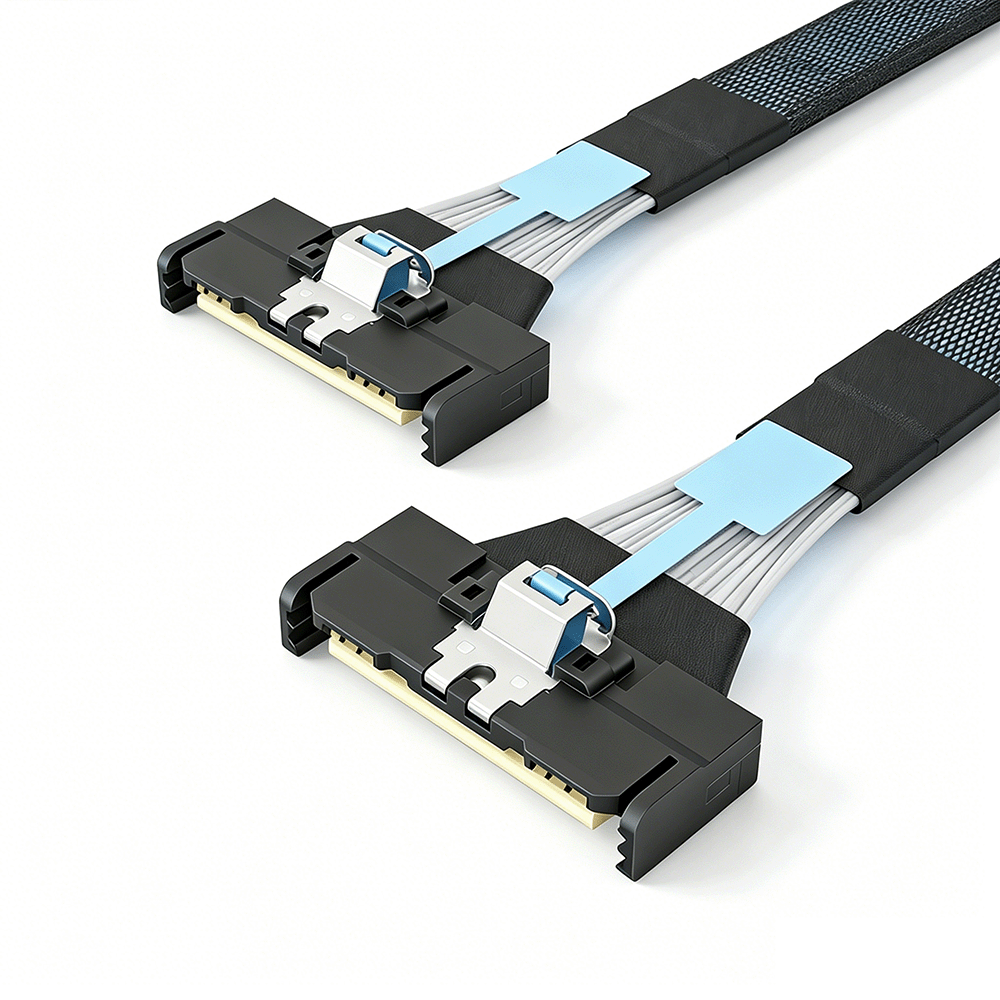
Evaluating production scale helps buyers assess whether a supplier can handle large projects and sudden volume increases without delays.
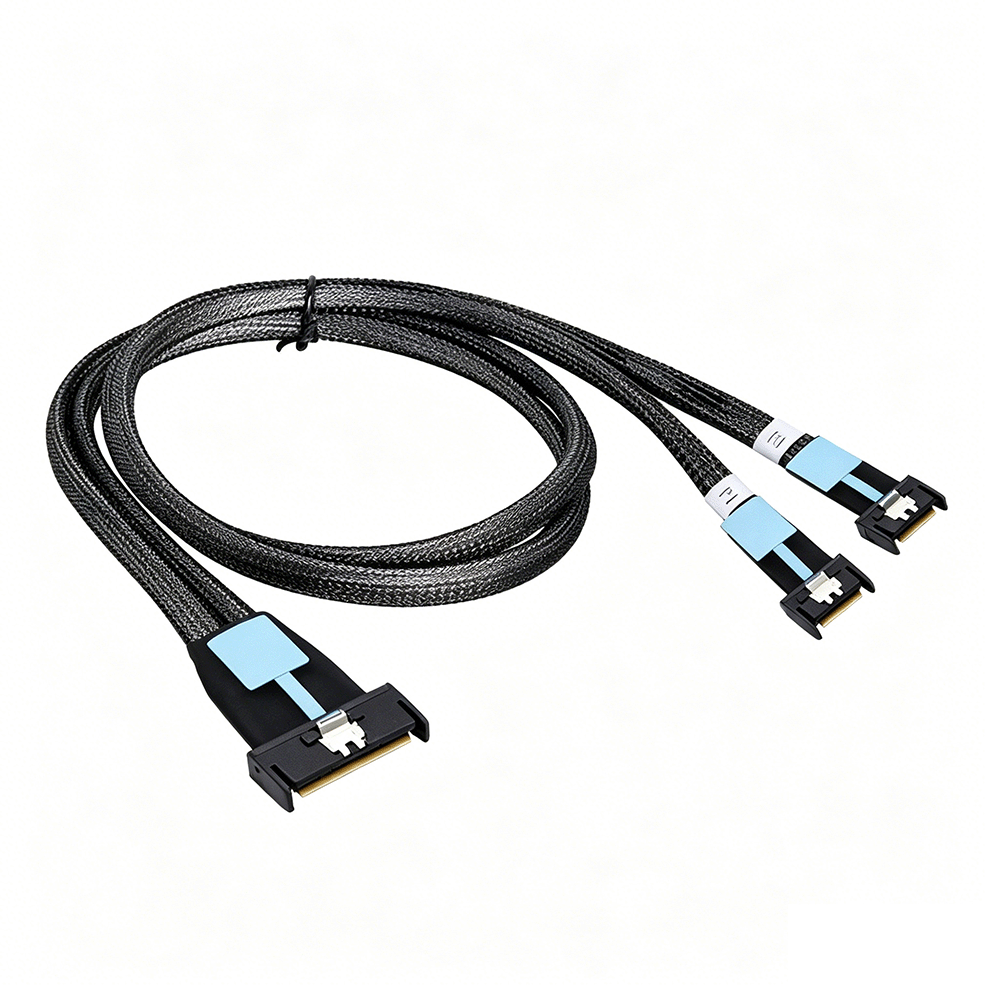
Utilizing specialized production equipment allows the plant to support high volume cable production with more consistent output. Product lines such as the PCIe Gen5 MCIO x8 cable can also provide buyers with a practical reference when evaluating high speed cable manufacturing capabilities.
| Evaluation Criterion | Standard Cable Supplier | Advanced Cable Factory |
| Production Automation | Manual assembly and hand solder | Automated processing lines |
| Testing Capability | Internal testing | In house laboratory |
| Inline Verification | Batch sampling at final packaging | First article and line inspection |
| Signal Integrity Scope | Basic continuity and resistance | Testing for high speed protocols |
Quality control should cover the entire production process rather than rely only on end of line checks. Qualified manufacturers follow ISO 9001 and ISO 14001 systems to maintain traceability from raw materials to finished products.
Quality teams inspect the first article against approved engineering drawings, while production lines perform 100% product inspection. An in house CNAS laboratory supports physical, mechanical, and environmental testing.
With production and quality controls verified, procurement teams can assess the factory's product range and engineering capabilities.
A capable manufacturer should cover modern server, storage, and networking interfaces. Experience with MCIO, SlimSAS, Mini SAS, and HD Mini SAS shows familiarity with data center routing requirements.
Sourcing high speed data center cables can simplify procurement while maintaining consistent quality across server racks. Buyers should also evaluate the factory's high speed transmission capabilities.
Multi channel routing for 4i, 8i, and 16i configurations.
85 ohm or 100 ohm impedance options for different systems.
High density connectors for compact server chassis.
Different conductor gauges for flexible routing requirements.
Complex routing requires advanced structural customization and specialized wire configurations. A factory's ability to produce an MCIO breakout cable demonstrates its channel separation capabilities.
Cross interface solutions such as MCIO to SlimSAS assemblies also show broader assembly expertise. Right angle connectors and fine pitch pins can support cable routing in space constrained server chassis.
Product diversity and customization are important, but buyers should also consider factory risks that standard datasheets may not reveal.
Standard testing may not reveal performance changes under real world thermal conditions in high density server racks. Ambient temperature testing alone may not reflect sustained heat inside data center equipment.
Thermal expansion can affect conductor alignment, causing impedance changes and signal degradation. Buyers should confirm whether factory testing includes thermal stress evaluation.
Tooling wear can gradually affect cable quality during long production runs. Aging molds and uncalibrated crimping tools may create variations in connector housings and terminal contact points.
These flaws can increase insertion loss and reduce mating durability. Established manufacturers should maintain tooling and calibration schedules to keep production consistent.
Evaluating these factors helps procurement teams assess long term operating costs rather than focusing only on the initial purchase price.
High speed cable pricing depends on conductor quality, connector design, assembly requirements, and signal integrity testing. Higher frequency specifications such as PCIe Gen5 require tighter tolerances and more demanding testing, which can increase costs.For accurate pricing, contact JMTJM's engineering team with your cable requirements.
Exceeding the recommended bend radius can alter conductor spacing and affect impedance. This may increase signal reflection, insertion loss, and bit error rates in high speed cables.
Custom cable development time depends on the connector configuration, materials, samples, and testing requirements. Procurement teams should confirm the engineering and production schedule with the factory before ordering.
Evaluating a high speed data center cabling factory requires inspecting production automation, laboratory testing capabilities, and mechanical engineering expertise. Selecting a manufacturing partner with strong R&D capabilities, comprehensive quality systems, and versatile interface coverage can help support reliable network performance.
Partnering with an experienced vendor protects your infrastructure investments against downtime and performance bottlenecks. Contact our technical team today to review detailed product specifications or request custom engineering samples for your next deployment.



Copyright © 2026 Guangdong Jiumutong Communication Technology Co., Ltd All Rights Reserved
설계


