Manufacturer Of High Quality Data Cable

Manufacturer Of High Quality Data Cable
Just as the AV industry has fully embraced HDMI 2.1 and its latest 2023 update HDMI 2.1b, HDMI.org dropped a big announcement at CES 2025: the official arrival of HDMI 2.2 is on the horizon.
The upgrade brings meaningful improvements, with two core advancements standing out for home theater and gaming users comparing HDMI 2.2 and 2.1: doubled bandwidth and a brand-new audio-video synchronization mechanism.
These changes are more than incremental—HDMI 2.1, for ll its strengths, still has clear constraints. Its 48Gbps maximum bandwidth struggles to meet uncompressed 8K demands, and its existing latency and sync systems can feel inconsistent in complex setups.
HDMI 2.2 is scheduled to launch in Q3 or Q4 2025, so let’s break down everything you need to know about this next-gen standard.
| HDMI 2.2 | HDMI 2.1 | |
| Bandwidth | 96Gbps | 48Gbps |
| Resolution | 4K @ 480Hz8K @ 240Hz10K @ 120Hz12K @ 120Hz | 4K @ 120Hz8K @ 60Hz |
| Cable type | Ultra 96G HDMI Cable | Ultra-High Speed HDMI Cable |
| Audio-video sync | LIP (Latency Indication Protocol) | ALLM (Auto Low Latency Mode) |
| Release date | 2025 (expected Q3–Q4) | 2017 (HDMI 2.1b updated 2023) |
| New features | FRL, AR, VR, MR, SR, FLD, LIP | SBTM, ALLM, QFT, QMS, VRR |
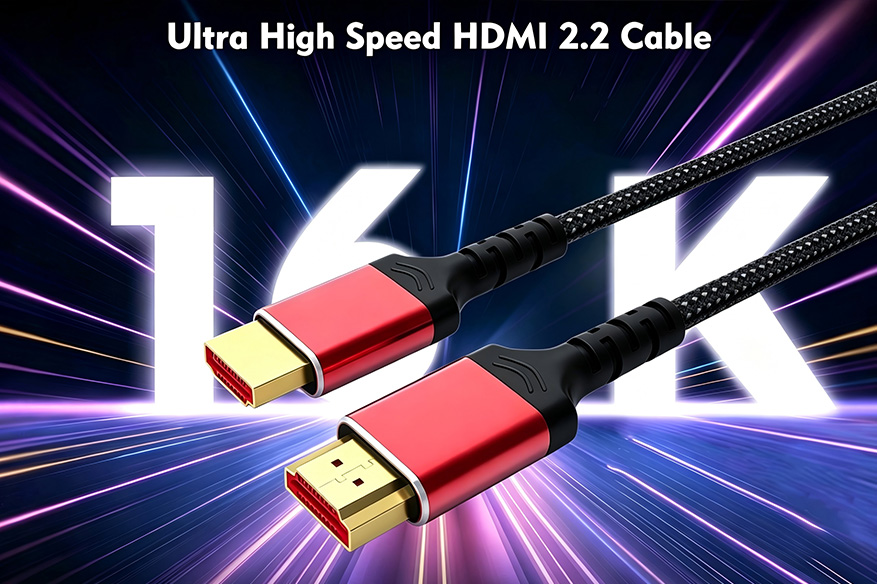
The most obvious upgrade from HDMI 2.1 to HDMI 2.2 is raw bandwidth. At 96Gbps, HDMI 2.2 effectively doubles HDMI 2.1’s capacity. For regular TV viewing and streaming, HDMI 2.1b is more than sufficient—but for uncompromised 8K and high-refresh gaming, it hits a hard ceiling.
Why does this matter now? High-end GPUs already support 4K at extreme refresh rates, and DisplayPort 2.1a has already reached 80Gbps. HDMI 2.2 closes that gap, future-proofing the interface for gamers and content creators who rely on HDMI connectivity.
As next-gen consoles, graphics cards, and displays roll out in the coming years, HDMI 2.2 ensures you won’t be limited by your cable or port.
We’ve quickly moved from Full HD to 4K, and now 8K and beyond are becoming mainstream. HDMI 2.1 helped push 8K@60Hz into reality, but it required compression and couldn’t support higher refresh rates. HDMI 2.2 removes those barriers.
For home users, uncompressed 8K RGB will finally be practical, unlocking true-to-life color and detail on large OLED and Mini LED screens. Commercial applications will benefit even more, with support for 10K, 12K, and future 16K displays used in digital signage, medical imaging, and professional production.
The result is a viewing experience so sharp it’s often compared to looking through a clear window—no exaggeration for next-gen panels.
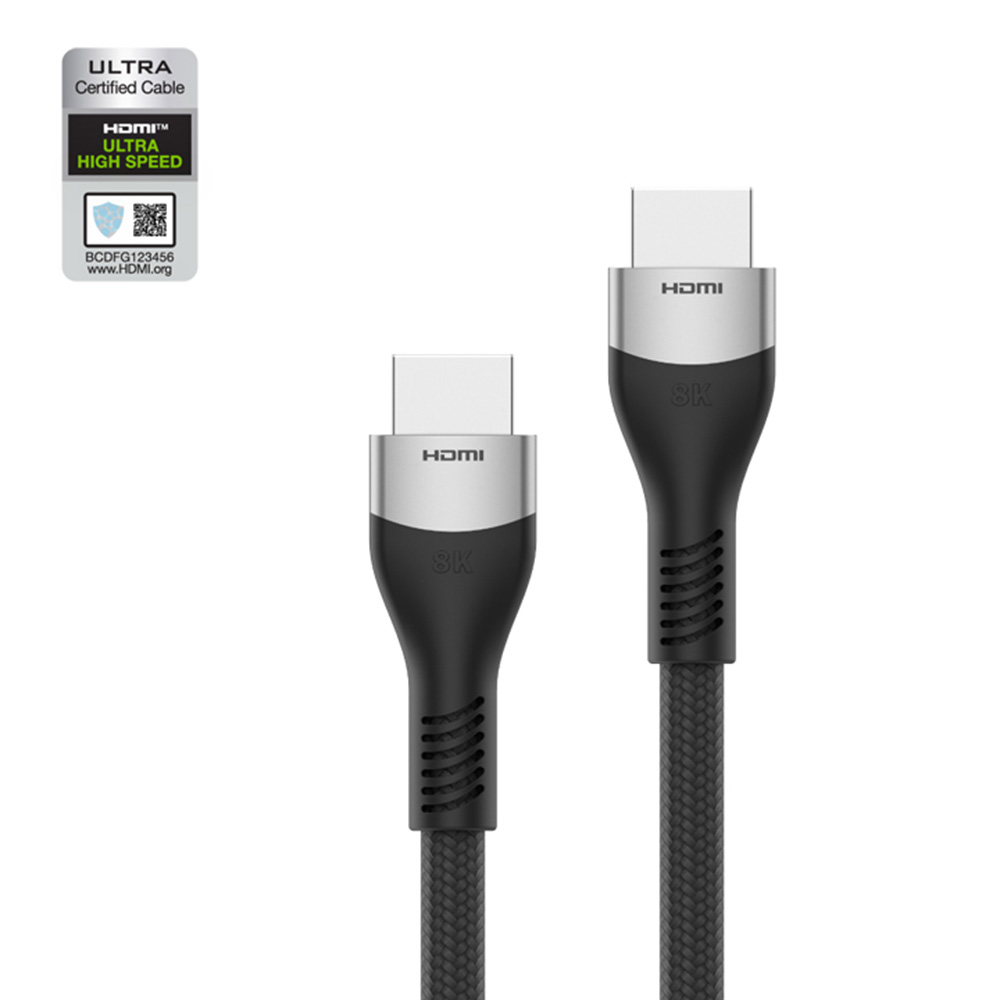
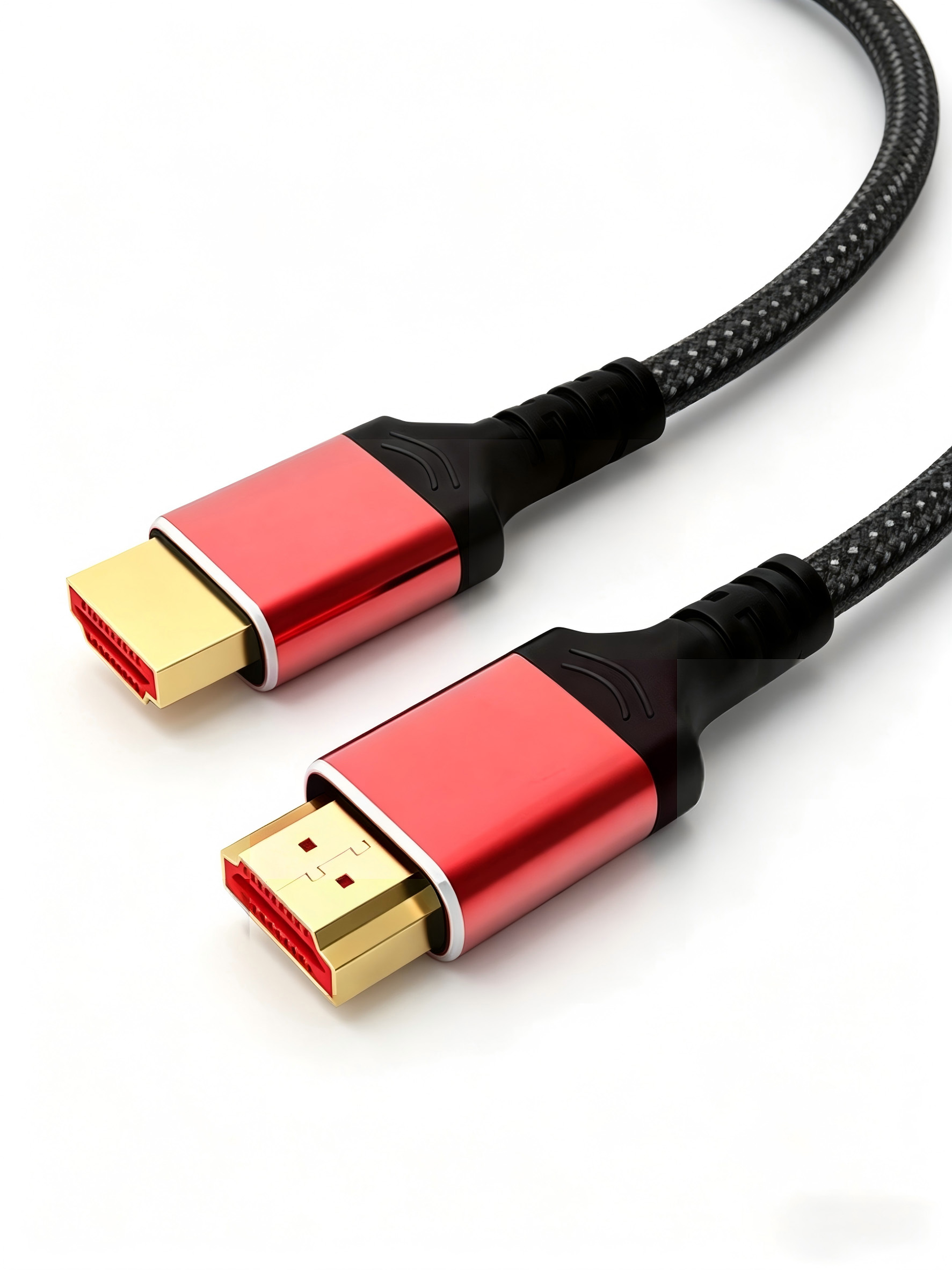
To unlock HDMI 2.2’s full potential, you’ll need a certified Ultra96 HDMI Cable. This single new standard replaces the confusing multiple certifications of HDMI 2.1, making shopping much simpler.
Best of all, Ultra96 cables and connectors are fully backward compatible with older HDMI devices. With nearly 20 times the bandwidth of the original 2002 HDMI 1.0 cables, Ultra96 is a long-term investment that will support upcoming devices for years.
One of the most common frustrations with HDMI setups is audio-video sync lag, especially in multi-device chains like TV → soundbar → receiver. HDMI 2.2 solves this with LIP (Latency Indication Protocol).
LIP actively measures and compensates for delay across multi-hop configurations, keeping audio and video perfectly aligned. Whether you’re using eARC for a home theater setup or daisy-chaining multiple devices, LIP delivers consistent, low-lag synchronization that ALLM alone can’t match.
HDMI.org announced HDMI 2.2 in January 2025, but certified cables and compatible devices won’t arrive until Q3–Q4 2025. Widespread adoption will take longer, with early use focused on commercial markets like 16K displays and large digital billboards.
Consumer products—including GPUs, TVs, and consoles—will integrate HDMI 2.2 gradually. Early high-end graphics cards may support its features, but full mainstream integration is expected closer to 2027.
Gaming remains a key battleground for HDMI and DisplayPort, and HDMI 2.2 raises the bar significantly. It enables uncompressed 4K@240Hz with 12-bit color, delivering buttery-smooth motion with stunning color accuracy.
Beyond gaming, HDMI 2.2 adds robust support for AR, VR, MR, SR (Spatial Reality), and FLD (Light Field Display)—critical for next-gen immersive devices. Paired with the new FRL (Fixed Rate Link) and LIP, HDMI 2.2 is built to support unforeseen future standards.
Applications
HDMI 2.1 standardized modern HDR with Dynamic HDR and HDR10, making 4K HDR OLED and LED TVs mainstream. The jump from HDMI 2.0’s 18Gbps to 48Gbps was transformative, enabling eARC for high-fidelity home audio and supporting 10K with DSC compression.
However, HDMI 2.1 suffered from confusing cable certifications (Standard, Premium, Ultra-High Speed) and couldn’t support 8K at high refresh rates without compression.
HDMI 2.2 retains essential features like ARC/eARC for home theater while unlocking unprecedented resolution and speed. A single Ultra96 cable can support 10K@60Hz 10-bit 4:4:4, or 12K@60Hz with 12-bit color using DSC.
It simplifies the ecosystem with one cable cert, eliminates bandwidth bottlenecks, and lays the groundwork for 8K, 10K, and 16K consumer displays. In many ways, HDMI 2.2 represents the biggest leap in clarity and performance since HDMI launched in 2002.
FAQs
HDMI 2.2 is an advanced AV transmission interface built for next-gen displays and devices. Its 96Gbps bandwidth, support for 8K@240Hz and up to 16K resolution, and improved sync make it ideal for gaming, home theater, professional AV, and commercial installations.
Yes. HDMI 2.2 supports 240Hz across multiple resolutions, including 4K and 5K over a single Ultra96 cable. 8K@240Hz requires DSC compression to efficiently manage data load.
Absolutely. HDMI has supported 144Hz for generations. HDMI 2.1 and 2.2 both handle 4K@144Hz easily, while HDMI 2.2 goes further with support for 16-bit color depth, delivering vastly better image quality than older standards at high refresh rates.


Copyright © 2025 Guangdong Jiumutong Communication Technology Co., Ltd All Rights Reserved
Designed by