Производитель высококачественного кабеля данных

Производитель высококачественного кабеля данных
Deploying modern server infrastructure for high frequency data processing brings severe cabling challenges to system engineers and procurement leaders. Supporting PCIe 5.0 at 32 GT/s per lane and PCIe 6.0 at 64 GT/s per lane places much tighter demands on channel loss, impedance control, crosstalk, and overall signal integrity.
Miscalculating signal drop or routing space quickly leads to network lag and expensive hardware redesigns. Enterprise data center teams must solve these physical limitations while keeping component costs and delivery schedules on track.
Choosing the right internal wiring determines overall system reliability, long term expansion flexibility, and cooling efficiency inside dense server racks. Engineering teams must review conductor quality, connector types, and manufacturing standards to keep system operations running smoothly over time.
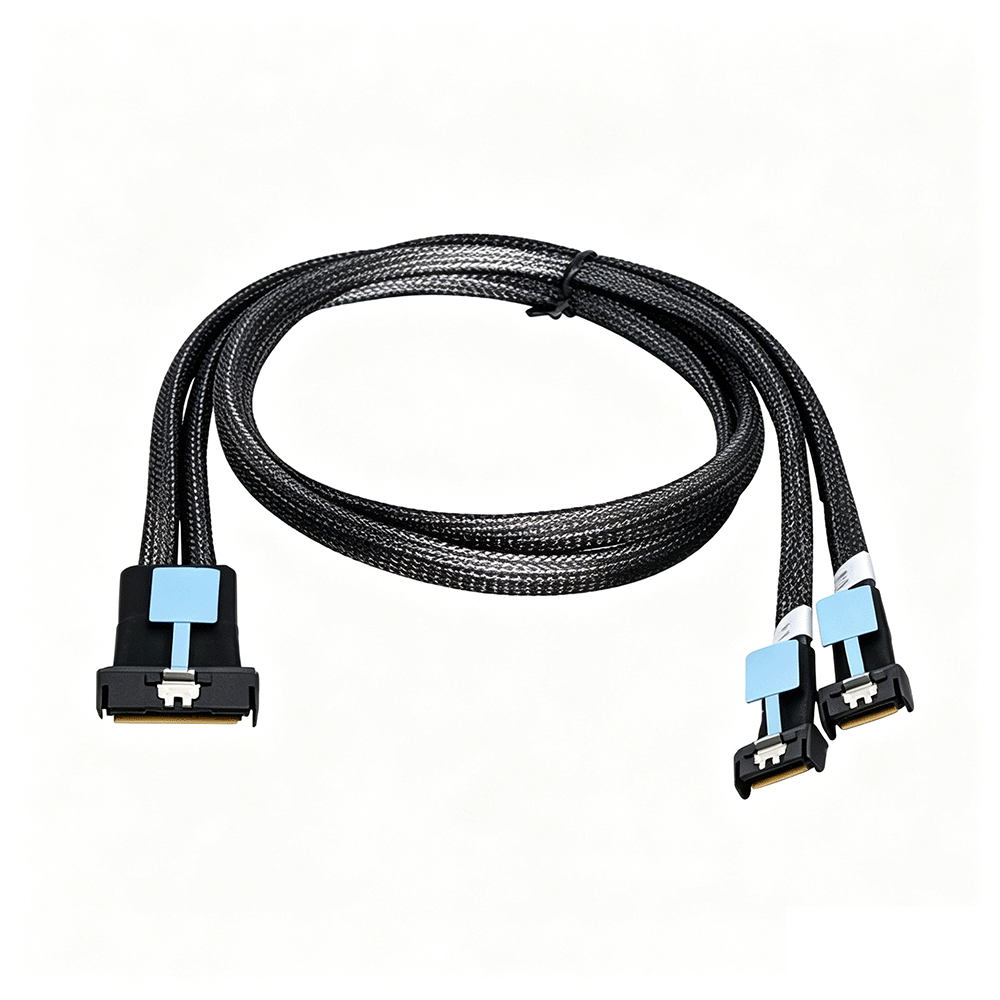
The main difference between PCIe 5.0 and PCIe 6.0 starts with signaling and data transfer requirements. PCIe 5.0 uses Non Return to Zero signaling at 32 GT/s per lane, where channel loss is influenced by cable length, conductor construction, dielectric properties, connector transitions, and overall channel design.
PCIe 6.0 doubles the transfer rate to 64 GT/s per lane and introduces PAM4 signaling, transmitting two bits per symbol instead of the signaling approach used by PCIe 5.0. However, PAM4 significantly reduces voltage margins compared with NRZ signaling, making PCIe 6.0 links more sensitive to system noise, electrical reflection, and channel interference.
The higher transfer rate and different signaling method also create different signal integrity requirements. PCIe 5.0 already requires careful control of insertion loss, crosstalk, and impedance, particularly as cable length and channel complexity increase.
For PCIe 6.0, the channel budget becomes more demanding because PAM4 provides less voltage margin. Purchasing managers should therefore pay closer attention to verified physical layer test data, including insertion loss, crosstalk, impedance performance, and other signal integrity results.
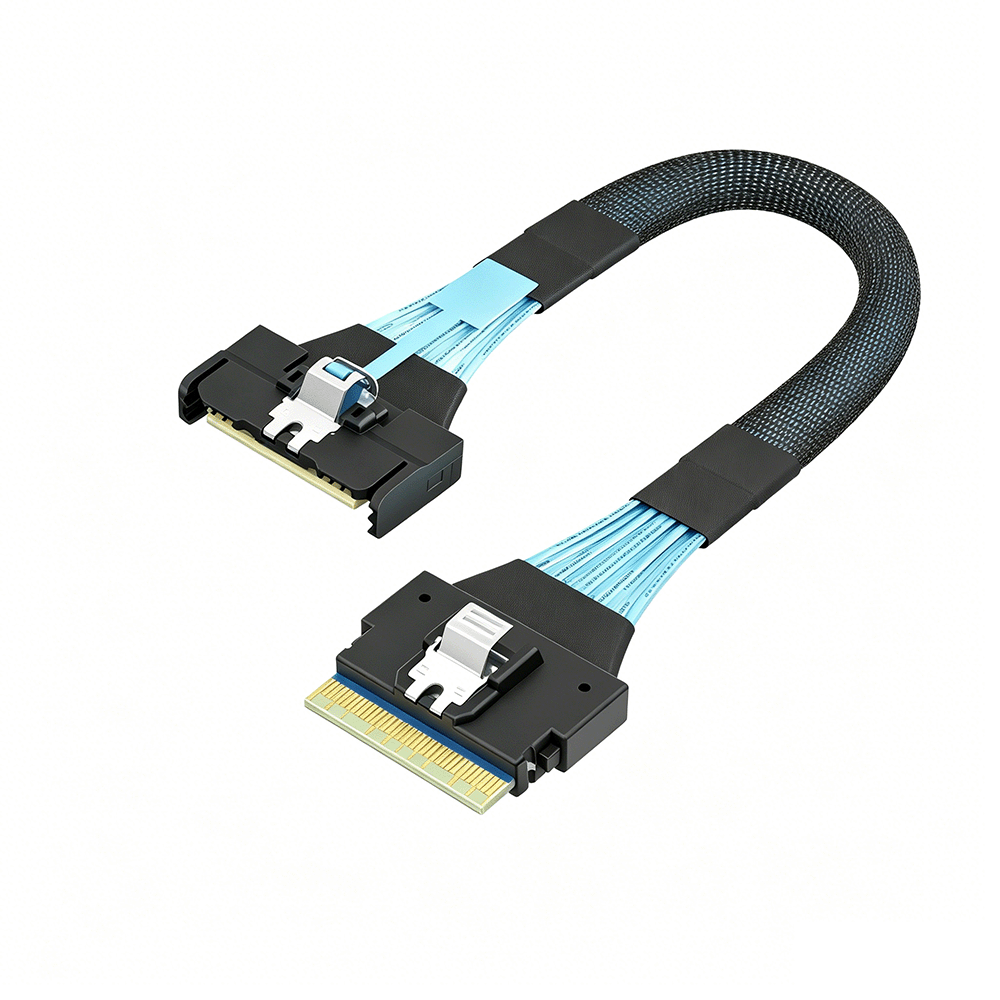
A properly engineered MCIO 8x to MCIO 8x cable can support reliable high speed connectivity where the cable design and overall system channel meet the requirements of the target application.
Both PCIe 5.0 and PCIe 6.0 systems use high density interconnects to support compact server designs, but the higher signaling requirements of PCIe 6.0 place greater demands on the overall cable and connector channel.
Interfaces such as MCIO and SlimSAS can support direct cable connections between system boards and compatible storage or expansion hardware, reducing reliance on longer PCB routing paths. As system bandwidth and density increase, connector selection, cable construction, routing length, and channel design become increasingly important when maintaining sufficient signal margins.
The role of MCIO in high density server interconnects is explored further in our guide to MCIO in the PCIe 5.0/6.0 era.
| Interconnect Parameter | PCIe 5.0 | PCIe 6.0 | Key Difference |
| Скорость передачи данных | 32 GT/s per lane | 64 GT/s per lane | PCIe 6.0 doubles the transfer rate |
| Сигнализация | NRZ | ПАМ4 | PCIe 6.0 uses a different signaling method |
| Signal Margin | Requires controlled channel performance | More demanding channel requirements | PCIe 6.0 has less voltage margin |
| Целостность сигнала | Low loss and controlled impedance remain important | Tighter control of channel loss and noise is required | PCIe 6.0 is more sensitive to channel impairments |
| Common Interconnects | MCIO, SlimSAS and PCIe cable assemblies | MCIO and other compatible high speed interconnects | Overall channel design becomes more critical |
Now that we have compared the key differences between PCIe 5.0 and PCIe 6.0 cable requirements, let us look at how internal cable placement can also affect server cooling and available routing space.
Tight server layouts create serious space and cooling hurdles during cabling setup. Modern artificial intelligence and supercomputing rigs pack multiple GPUs, storage drives, and network cards into minimal rack space.
Excessive heat can affect cable dielectric materials over time, while poorly routed wire bundles restrict airflow around high power components. Managing cabinet thermals is essential for preserving signal integrity and operational stability across continuous compute jobs.
Selecting small footprint connectors solves key space bottlenecks around backplanes and PCI expansion slots. Standard straight plugs often need too much vertical room, forcing tight bends that can place mechanical stress on internal conductors and shielding structures.
Right angle connector designs reduce routing space requirements and help maintain controlled signal paths when properly engineered. Installing an angled PCIe Gen5 MCIO cable enables techs to run lines neatly along chassis walls, helping preserve airflow paths around high power components.
Scalable network layouts rely on versatile wiring setups that distribute bandwidth across storage drives and processing units. A breakout cable can connect a high lane count host interface with multiple downstream interfaces, depending on the system architecture.
АнMCIO 8X to 2 MCIO 4X breakout cable can split one x8 interface into two independent x4 channels, creating a more flexible connection topology for compatible high density server and storage systems.
Cable outer diameter must stay slim to minimize air resistance inside tight 1U and 2U enclosures.
Safe bend radius limits must be followed during installation to avoid tearing internal foil layers.
Shielding wraps and ground wires must stay consistent to handle normal equipment vibration.
Once internal cabinet airflow is secured, engineering teams must also tackle interface matching when combining different hardware generations.
Data center expansions rarely happen all at once, creating mixed hardware environments where different protocols must work side by side. Data systems frequently combine older drive arrays with newly installed host boards inside one enclosure.
Connecting SFF 8654 SlimSAS ports with newer MCIO interfaces requires a properly engineered interconnect that maintains required electrical and mechanical characteristics.
Connecting legacy storage ports to modern system boards takes precise impedance matching and solid shielding through the plug housing.
Using a dedicated MCIO to SlimSAS SFF-8654 cable helps hardware managers upgrade compute blades smoothly while keeping original storage arrays active in the rack. Standardizing these internal links across RAID setups and expansion cards keeps overall hardware maintenance simple and reliable.
Beyond mechanical fits, procurement leads must weigh the true cost of wire choices across the entire lifespan of their hardware assets.
Focusing only on cheap unit prices often brings unexpected financial risks during mass assembly and field deployment. Budget wire builds often hide minor factory defects like loose solder joints or uneven insulation wrapping.
These flaws show up as random signal drops, high error rates, and long hours spent troubleshooting in factory testing. Replacing faulty cables in finished builds quickly wipes out any small savings made on initial purchase price.
Consistent impedance control and durable build quality protect costly processor chips from electrical feedback and sudden speed throttles. Controlled impedance and consistent cable construction help reduce signal reflections and other channel impairments that can affect sensitive PHY interfaces.
Appropriate contact plating and connector construction improve contact reliability over repeated mating cycles, helping avoid unexpected disconnects during hot swap maintenance.
Unexpected component delays pose a major financial threat to custom server build schedules. Sourcing custom wire lengths, special pin configurations, or durable outer jackets requires vendors with strong factory capacity and dependable raw material supply.
Establishing clear supply agreements with reliable manufacturers can improve delivery predictability when ramping up volume production.
With clear cost metrics set, sourcing teams can follow a clear roadmap to review and select the right cable suppliers.
Using a thorough vendor review process can reduce technical risks and support consistent quality across large order volumes. Sourcing managers should request verified signal integrity test data before placing high volume purchase orders.
Key reports should include eye diagrams, insertion loss data, crosstalk results, and the exact test bandwidth used for PCIe 6.0 cable procurement qualification. Compliance with safety and environmental rules like RoHS and REACH must also be fully confirmed.
This approach is particularly important when evaluating PCIe 6.0 cable assemblies, where tighter signal integrity requirements leave less margin for channel loss and noise.
Checking a supplier's factory equipment gives you a clear picture of their quality control and production output. Automated stripping, termination, inspection, and testing equipment reduce process variation during fine pitch plug assembly.
Working with a proven factory partner ensures automated production lines keep yields high and product quality steady across every manufacturing run.
Reliable technical guidance and engineering support complete a solid vendor relationship. Dependable suppliers can provide engineering consultation, drawing reviews, signal integrity evaluation, and prototype support before volume production to solve engineering issues early on.
Final unit pricing depends on conductor and cable construction, dielectric materials, connector hardware, assembly complexity, cable length, shielding requirements, and production volume.
For accurate pricing based on your specific thermal requirements and custom layout needs, contact JMTJM's engineering team directly.
Selecting insulation materials without considering their dielectric properties and high frequency performance can increase channel loss and harm signal integrity.
Substituting lower grade outer jackets or inconsistent foil shielding to save money can increase insertion loss, crosstalk, and other signal integrity risks across differential pairs.
Prototype lead time depends on connector availability, tooling requirements, cable construction, testing scope, and raw material availability.
Procurement teams should confirm the expected sample schedule and test plan with the supplier before kicking off a custom project.
Navigating PCIe 5.0 and PCIe 6.0 cable procurement requires balancing signal integrity, cabinet space, compatibility, and overall hardware costs. Focusing on low signal loss, smart connector choices, and automated build quality protects server builds from network delays and costly field breakdowns. Teaming up with experienced cable manufacturing experts ensures smooth component supply and reliable system performance for years to come.
Contact our team today to discuss your custom high speed cabling requirements, request engineering samples, or schedule a signal integrity consultation for your next generation server deployment.



Copyright © 2026 Guangdong Jiumutong Communication Technology Co., Ltd All Rights Reserved
Спроектирован


