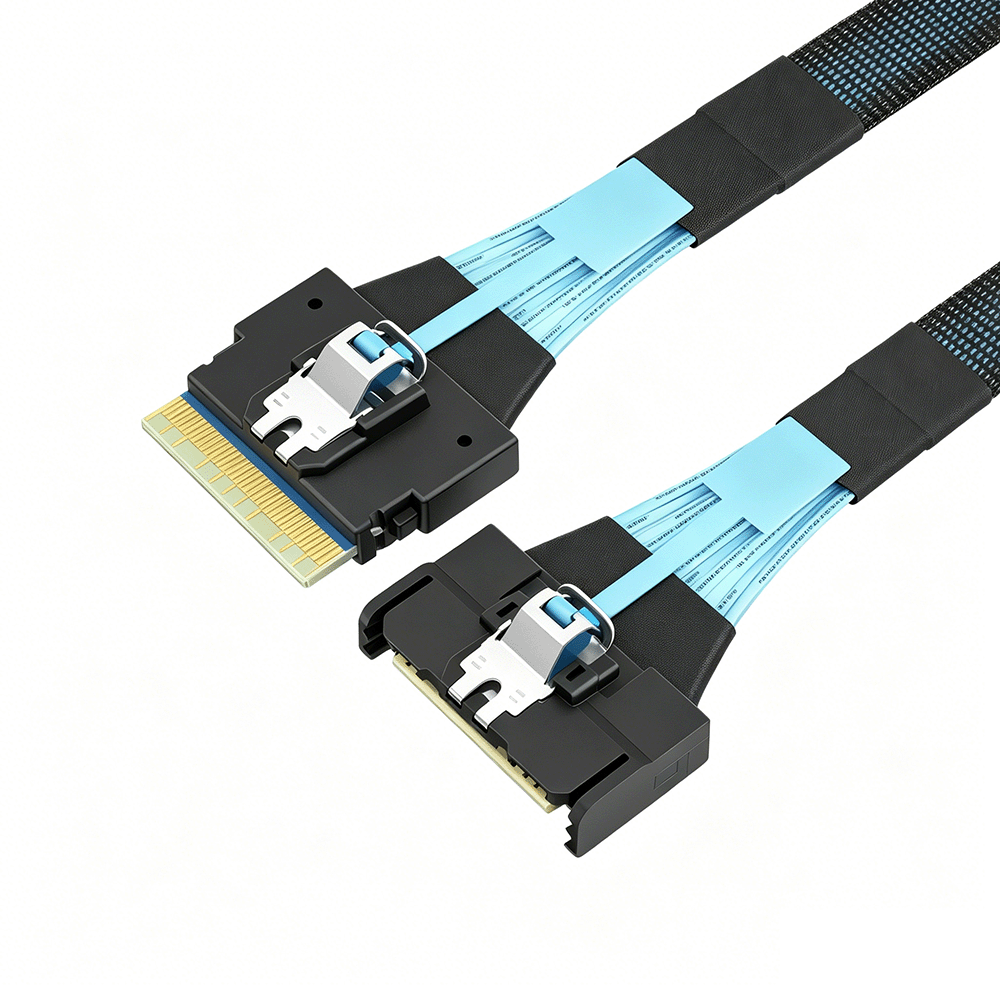
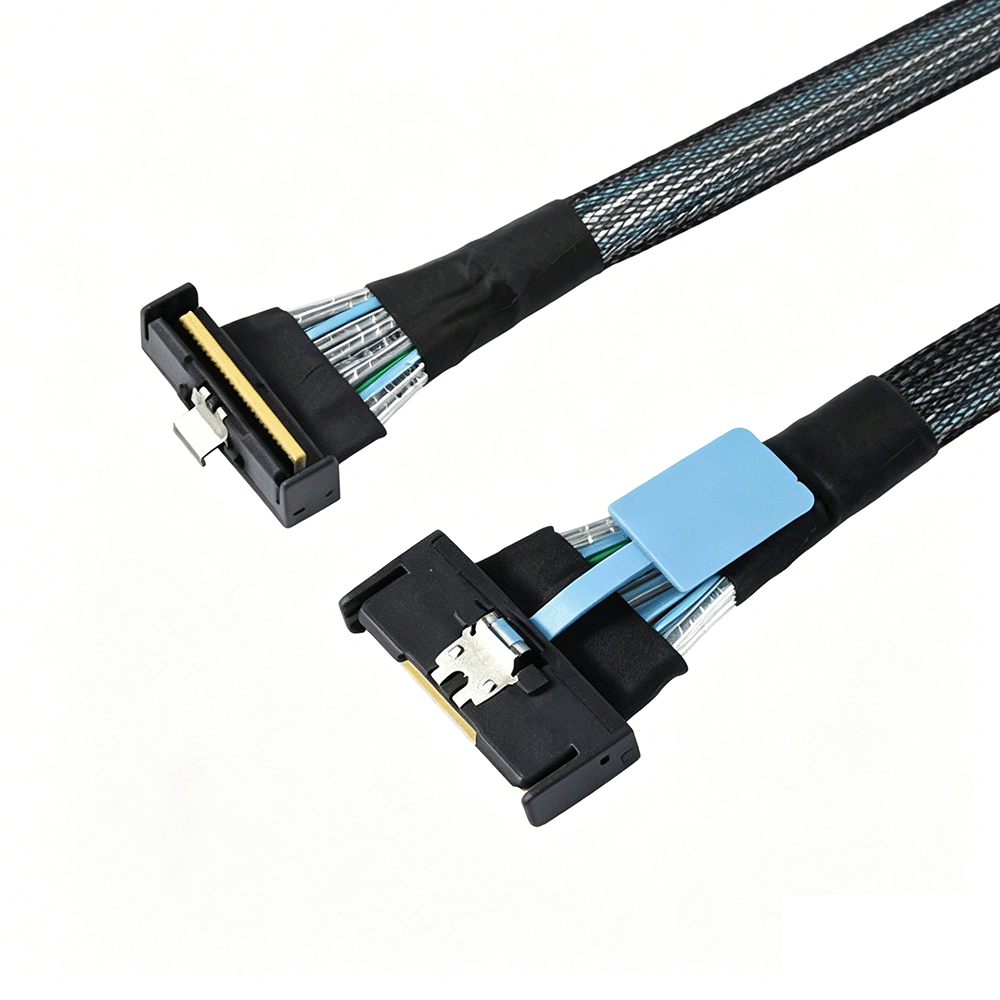
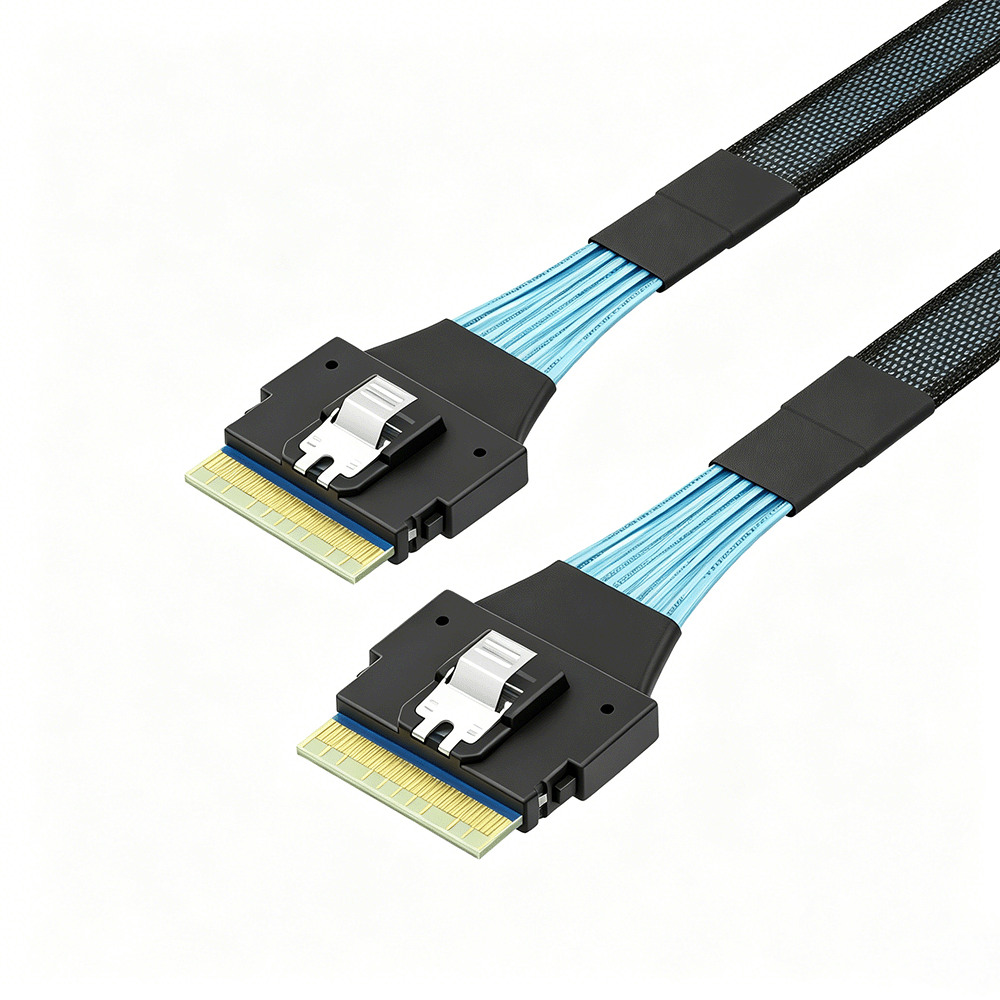
Manufacturer Of High Quality Data Cable

Manufacturer Of High Quality Data Cable
As AI computing booms and HPC clusters become widespread, server storage interfaces are no longer just “simple connectors”—bandwidth, density, compatibility, and scalability directly determine computing limits and deployment costs. This article breaks down today’s two most popular mainstream interfaces: SlimSAS and MCIO, helping you choose wisely, avoid mistakes, and master real-world use cases.
1. SlimSAS: Compact All-Around Storage Interface, Enterprise-Grade Mainstream Choice
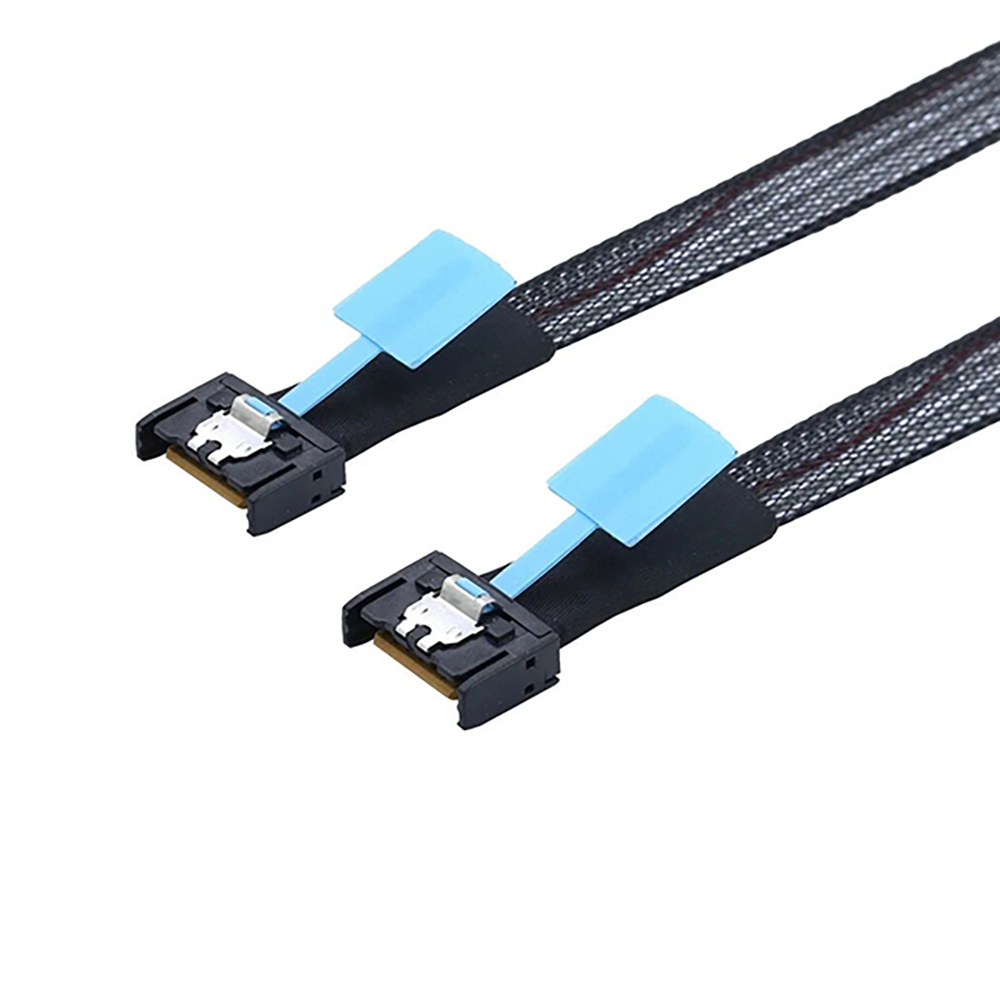
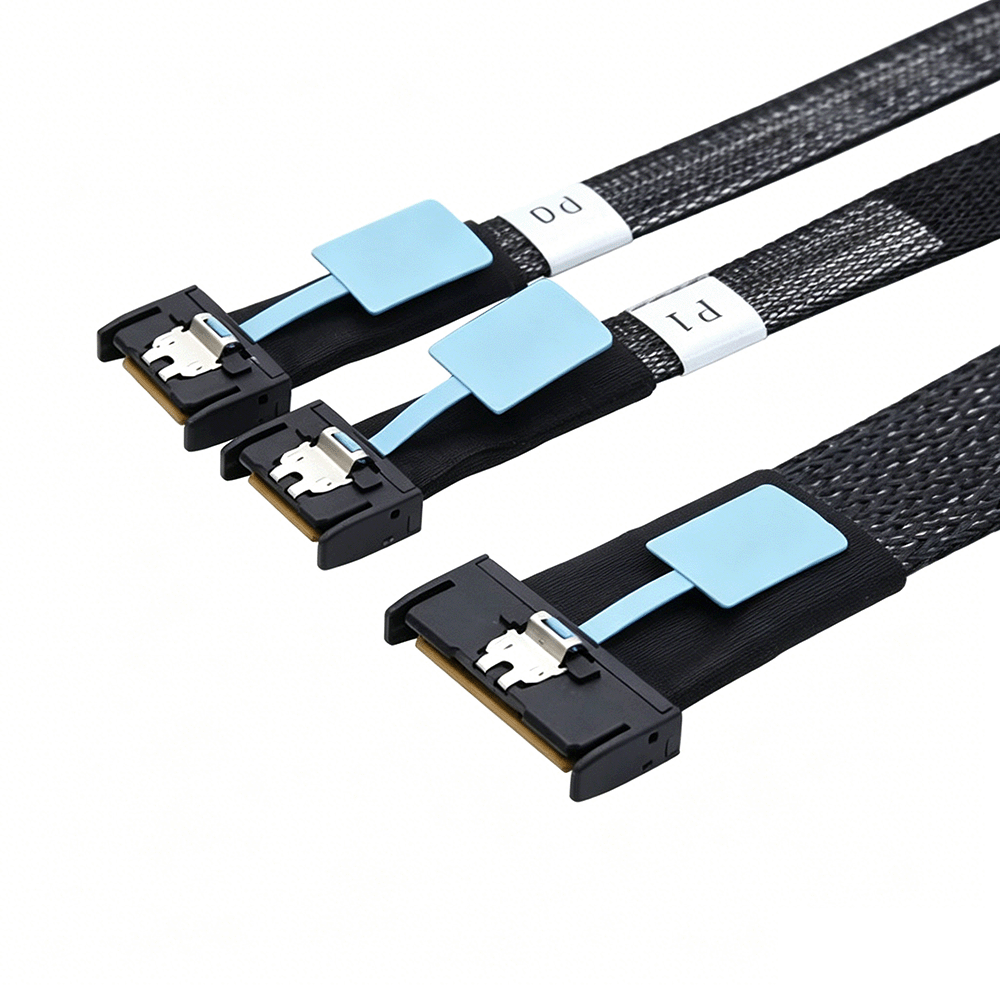
SlimSAS (Slimline SAS) is a miniaturized, high-density evolution of the legacy SAS interface, standardized as SFF-8654, and widely regarded as the “jack-of-all-trades” for modern server storage.
Physical specs: Available in 4i (38pin / 4 lanes) and 8i (74pin / 8 lanes), smaller form factor with flexible cabling
Protocol support: SAS 4.0 (24Gbps) + SATA + NVMe (PCIe 4.0/5.0), up to PCIe 5.0 x8 per port
Drive compatibility:
1.4i: Up to 4 SAS/SATA drives, or 1 U.2 NVMe drive
2.8i: Up to 8 SAS/SATA drives, or 2 U.2 NVMe drives
Core role: Storage-focused, full compatibility, ideal for mixed SAS/SATA/NVMe environments.
Compared with its predecessor MiniSAS HD, SlimSAS delivers higher bandwidth, smaller size, and greater density, perfectly fitting 1U/2U high-density servers. It is the reliable choice during the transition from traditional storage to NVMe.
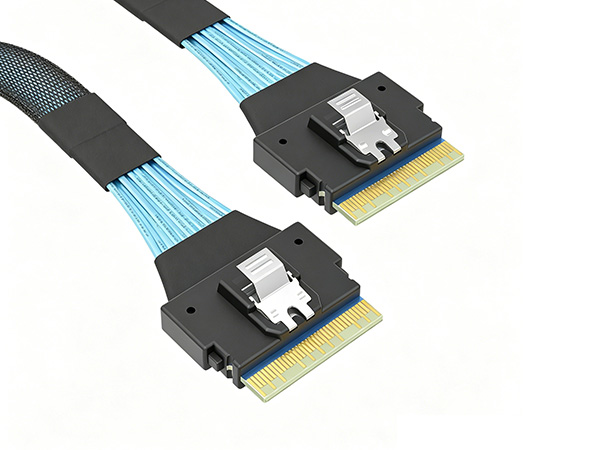
2. MCIO: Next-Gen High-Speed Interconnect, Beyond Storage
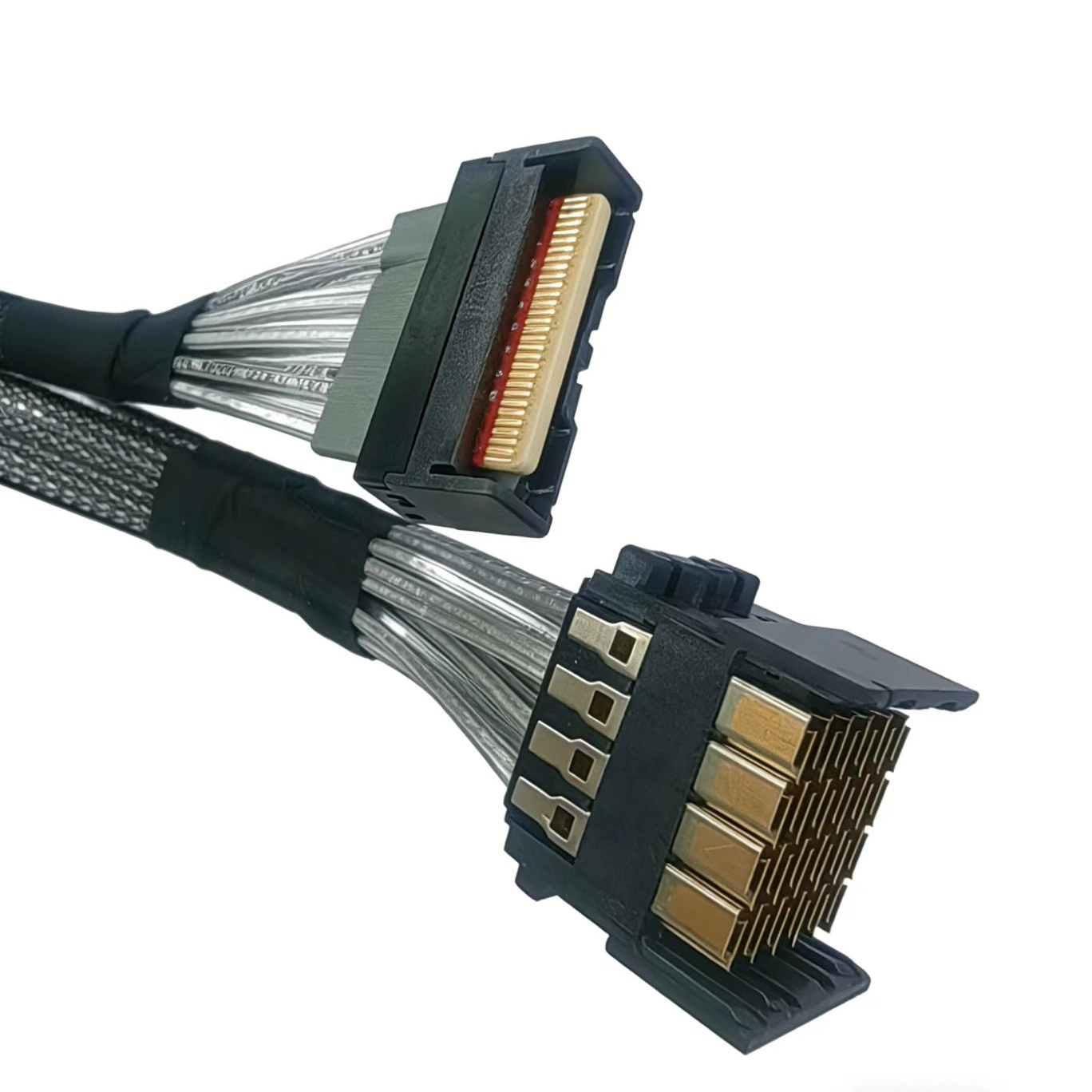
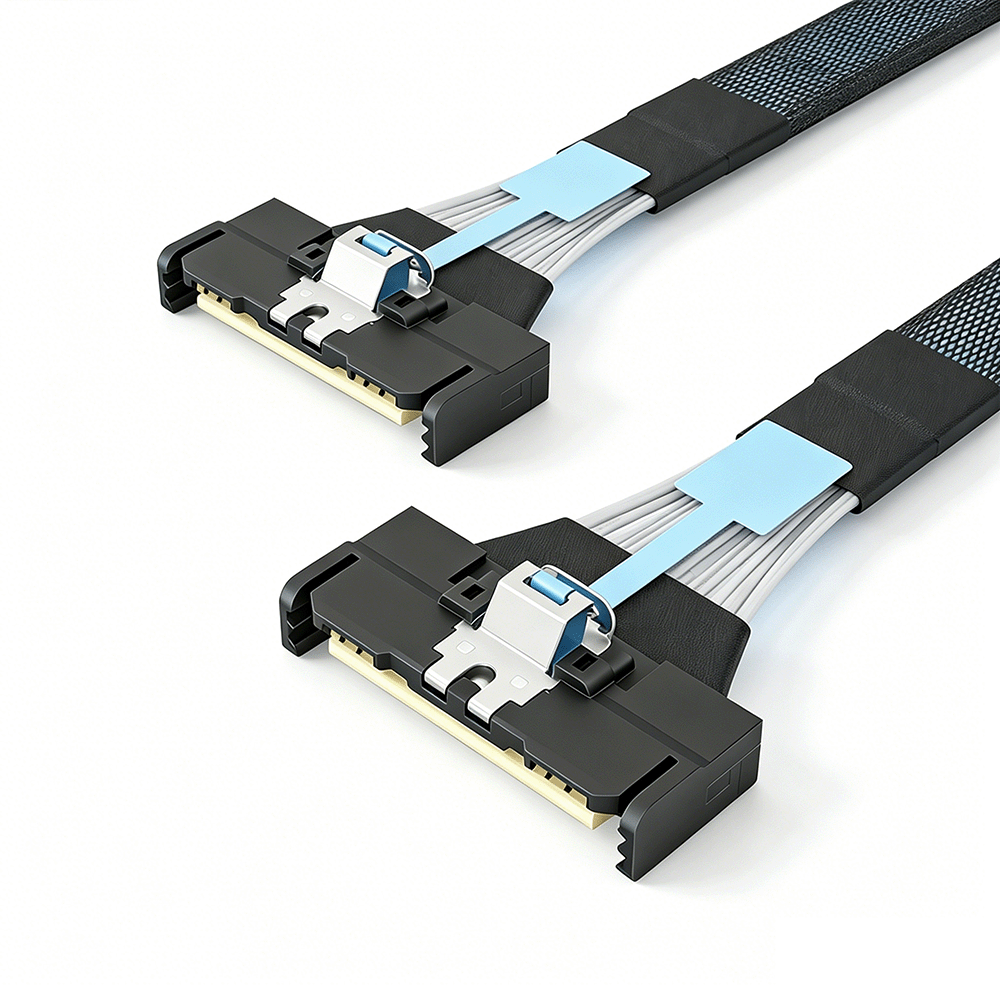
MCIO (Multi-Channel Input/Output), standardized as SFF-TA-1016, is an ultra-high-speed universal interconnect built for PCIe 5.0/6.0 and CXL. It serves not only storage but also chip-to-chip links, memory expansion, high-speed networking, and more.
Physical specs: Primarily 4i/8i, with extended versions 16i/20i/24i; aggregated bandwidth per port far exceeds SlimSAS
Key advantages:✅ Higher speed: Better signal integrity than standard PCIe, supporting nextgeneration ultrahighspeed protocols✅ Higher density: Smaller footprint with more lanes, saving critical motherboard space✅ Wider usage: NVMe storage, GPU/DPU interconnect, CXL memory expansion, InfiniBand networking, etc.
Typical deployment: GB200 GPU modules feature an MCIO x16 port, directly connecting to DPU in 1U compute nodes and enabling front-end InfiniBand networking—making it a standard high-speed channel for premium AI/HPC platforms.
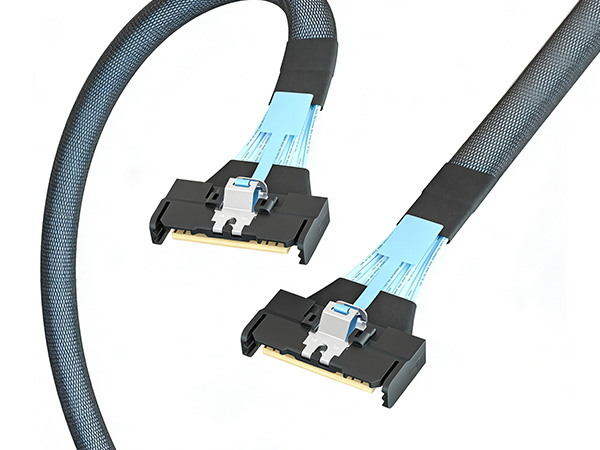
3. Core Comparison: SlimSAS vs. MCIO
Many ask: If SlimSAS is already versatile, why do we need MCIO? The answer lies in positioning and capabilities.
Comparison | SlimSAS (SFF-8654) | MCIO (SFF-TA-1016) |
Core Position | Dedicated storage interface | Universal high-speed interconnect |
| Protocol Support | SAS/SATA/NVMe | NVMe/PCIe/CXL; no native SAS/SATA |
| Bandwidth | Up to PCIe 5.0 x8 per port | Extensible to x16+ per port, higher total bandwidth |
| Form Factors | Mainly 4i/8i | 4i/8i/16i/20i/24i |
| Ideal Use Cases | Mixed storage, traditional enterprise storage, legacy compatibility | AI/HPC, GPU clusters, CXL, nextgen high-speed platforms |
In short: SlimSAS is the versatile veteran for storage; MCIO is the multi-scenario high-speed newcomer.
4. Critical Myth Busting: Can MCIO Directly Connect to SAS/SATA Drives?
Important clarification: MCIO does NOT natively support SAS/SATA at the protocol level!So-called “MCIO-to-SAS/SATA” adapters on the market work by using MCIO only as a physical channel, paired with a dedicated SAS controller for protocol translation. This is not native compatibility-like “shooting mosquitoes with a cannon”: costly and rarely used in regular storage.
5. Selection Guide: Which One Fits Your Scenario?
Choose SlimSAS if you:
Need servers to support mixed SAS/SATA/NVMe drives
Use traditional enterprise storage with RAID cards + backplanes
Prioritize mature ecosystem, low cost, and high compatibility
Deploy 1U/2U high-density storage nodes balancing expansion and cooling
Choose MCIO if you:
Build AI training clusters, HPC systems, or high-density GPU/DPU nodes
Require PCIe 5.0+/CXL next-generation high-speed protocols
Face extreme motherboard space constraints needing high lane aggregation
Need unified solutions for chip interconnect, memory expansion, and highspeed networking
Design hardware forward-compatible for the next 3–5 years
Conclusion
Amid the AI and HPC revolution, storage interfaces have evolved from “connection tools” into key bottlenecks for computing performance.SlimSAS secures today’s enterprise storage with full compatibility; MCIO defines next-generation hardware architecture with high speed and multi-scenario support.
There is no absolute “better”—only the best fit for your infrastructure. Understand the differences, choose wisely, and unlock full computing potential!



Copyright © 2026 Guangdong Jiumutong Communication Technology Co., Ltd All Rights Reserved
Designed by