Manufacturer Of High Quality Data Cable

Manufacturer Of High Quality Data Cable
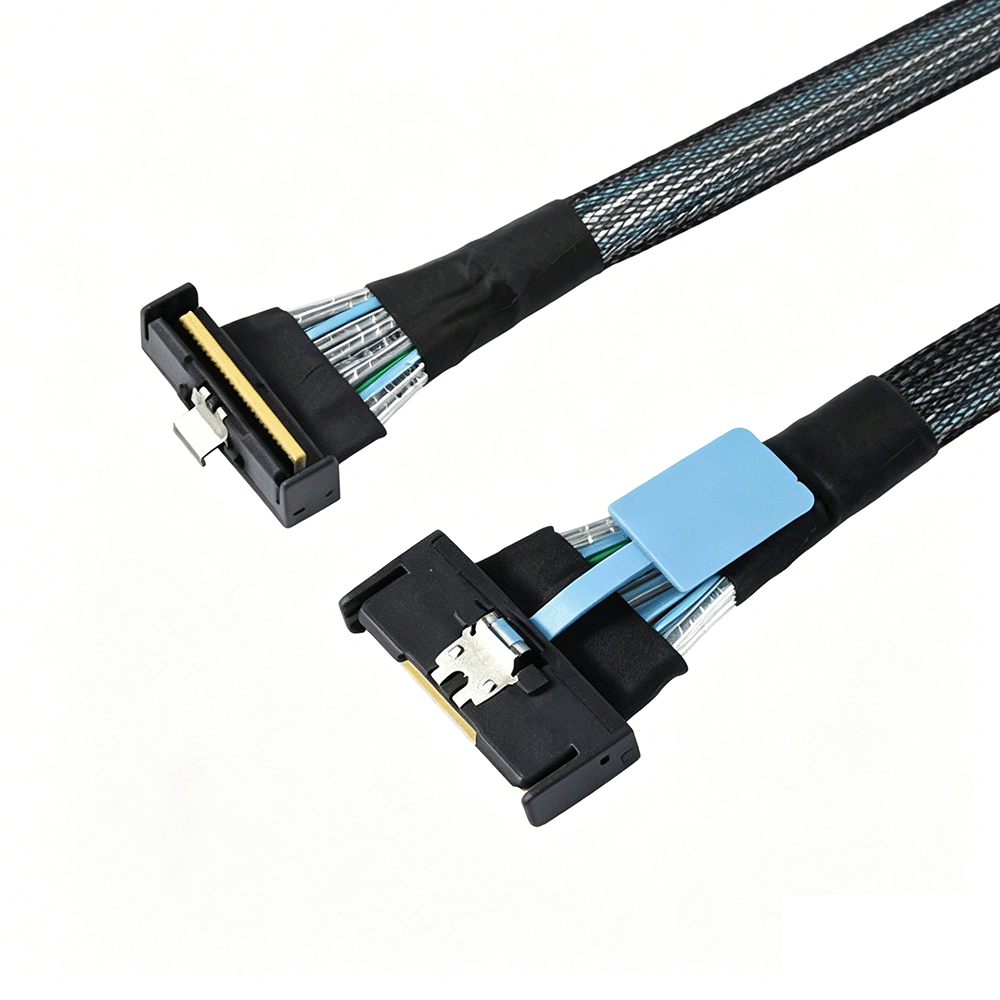
In the high-speed, high-density ecosystems of modern AI servers, storage arrays, and next-gen data centers, MCIO 16X (Mini Cool Edge IO 16X) cables have become the de facto internal interconnect for PCIe 5.0 and PCIe 6.0 architectures. Defined by the SFF-TA-1016 specification, this 124-circuit, 0.6mm-pitch interface delivers unprecedented bandwidth—up to 64Gbps per lane—enabling direct, low-latency connections between CPUs, GPUs, DPUs, and high-density NVMe SSD backplanes. However, as signal speeds rise and chassis space shrinks, the physical integrity of the MCIO 16X interface is under unprecedented stress.
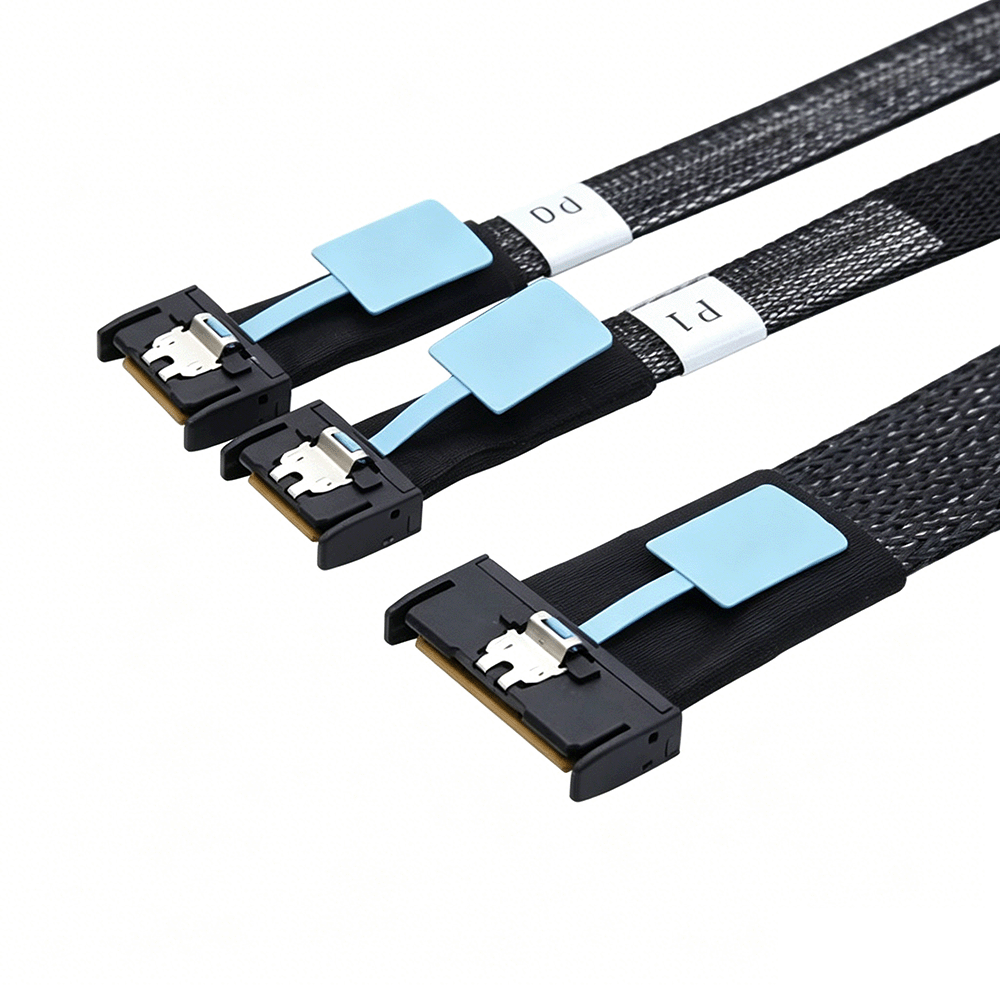
While the standard MCIO 16X specification defines electrical performance and basic mechanical form, it does not mandate critical protective features that prevent the most common field failures: misalignment damage, pin scraping, and electrostatic discharge (ESD). A truly robust MCIO 16X cable assembly requires three layers of defense: the standard MCIO 16X, the anti-slant (anti-misalignment) MCIO 16X, and the scoop-proof (contact-shrouded) MCIO 16X. Omitting any of these creates a critical vulnerability in your system's reliability.
The Foundation: Standard MCIO 16X (SFF-TA-1016 Compliant)
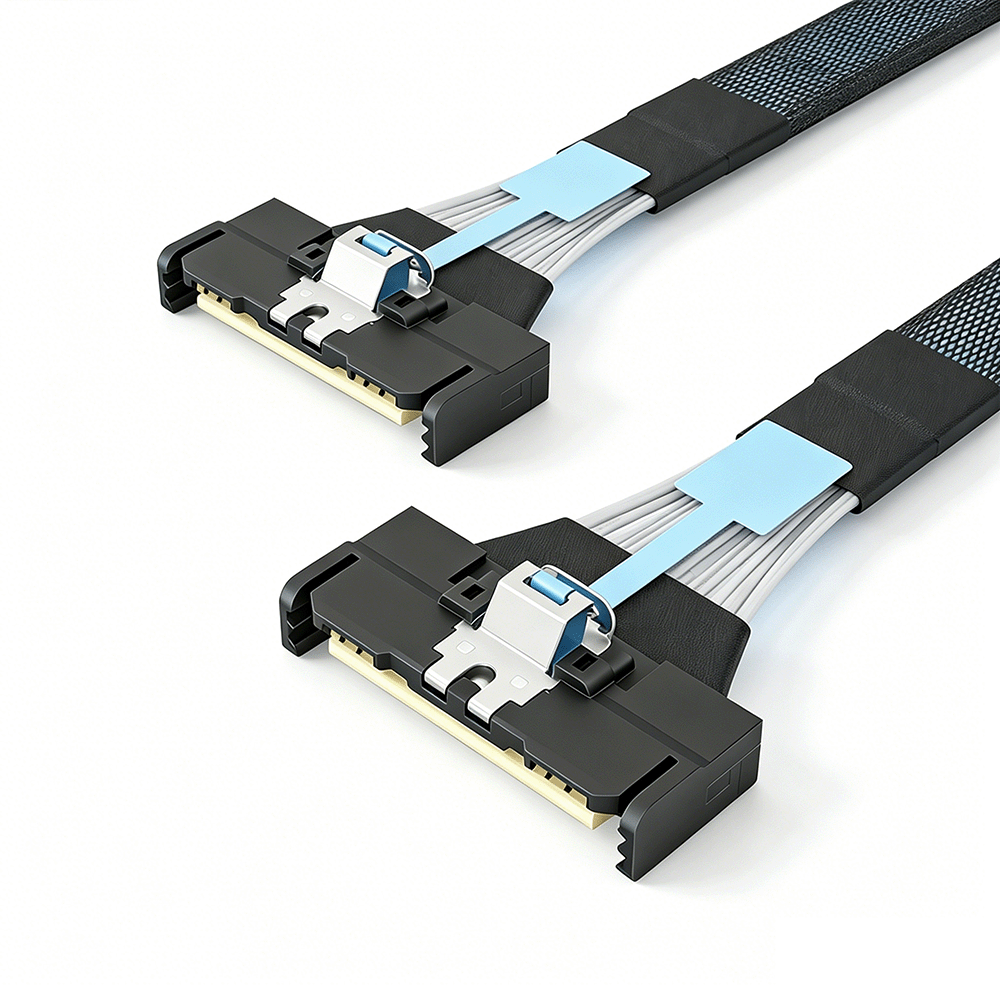
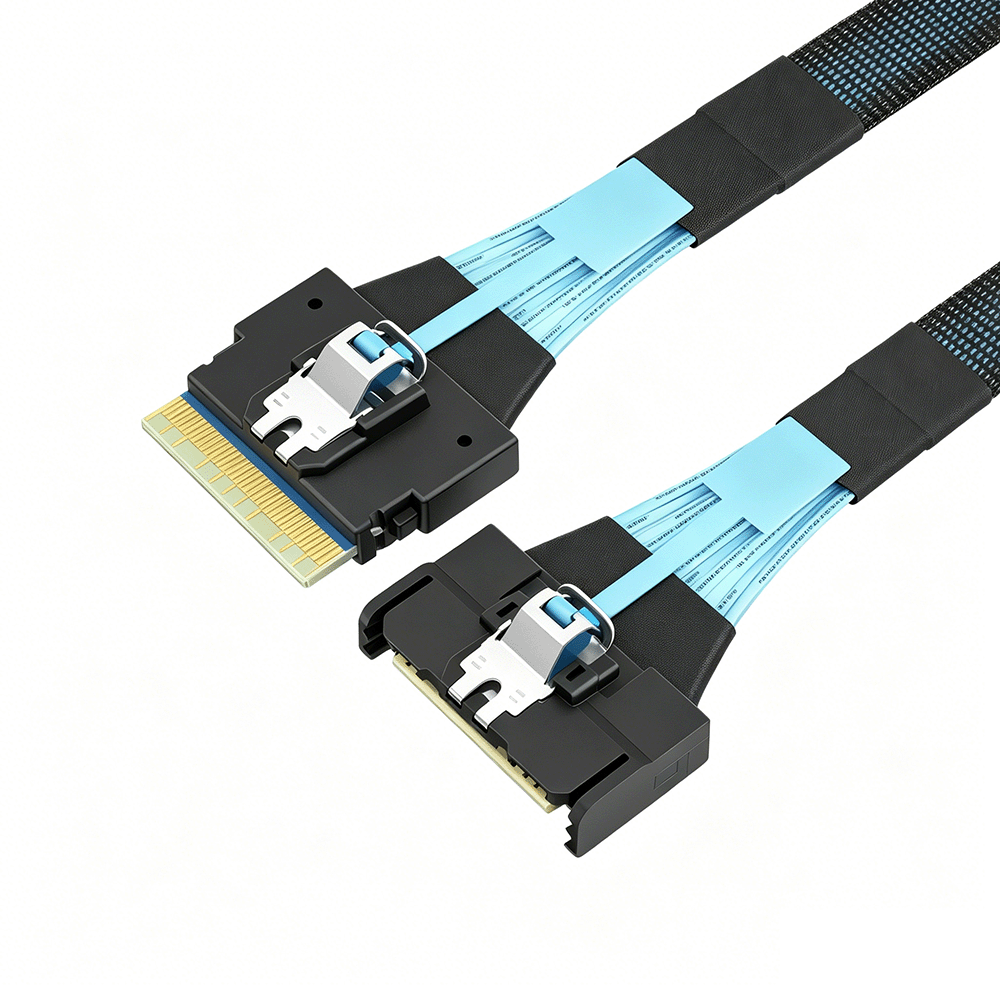
The standard MCIO 16X connector establishes the baseline for high-speed performance. It supports 16 PCIe lanes, is backward-compatible with smaller MCIO form factors (4X/8X), and offers a slim profile for optimal airflow in dense chassis. It is the essential building block, supporting the 32GT/s signaling of PCIe 5.0 and scaling for the future 64GT/s of PCIe 6.0.
However, the standard design has a fundamental flaw: it lacks robust mechanical guidance. In the tight confines of a server chassis, technicians often cannot visually or physically align the connector perfectly. Forcing a slightly angled plug into the cage is the leading cause of MCIO port damage.
The First Line of Defense: Anti-Slant / Anti-Misalignment MCIO 16X
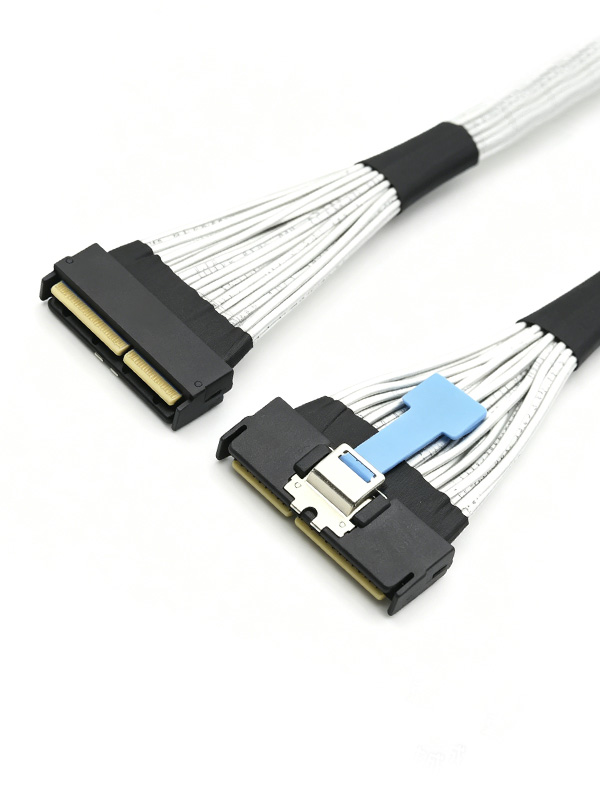
The anti-slant (or anti-misalignment) MCIO 16X addresses the primary failure point: physical misalignment during mating. This design integrates precision guide posts, asymmetric keying, and a reinforced connector shell that prevents the plug from being inserted at an angle or reversed.
Guided Mating: The integrated guide rails ensure the plug self-centers as it is inserted, eliminating the need for perfect visual alignment.
Asymmetric Keying: A unique key structure physically blocks reverse insertion, a common mistake during frantic maintenance.
Statistical Impact: Industry data shows that over 40% of all MCIO connector failures stem from (angled insertion) or reverse forcing. Implementing the anti-slant design eliminates nearly all of these issues.
The Final Barrier: Scoop-Proof / Contact-Shrouded MCIO 16X
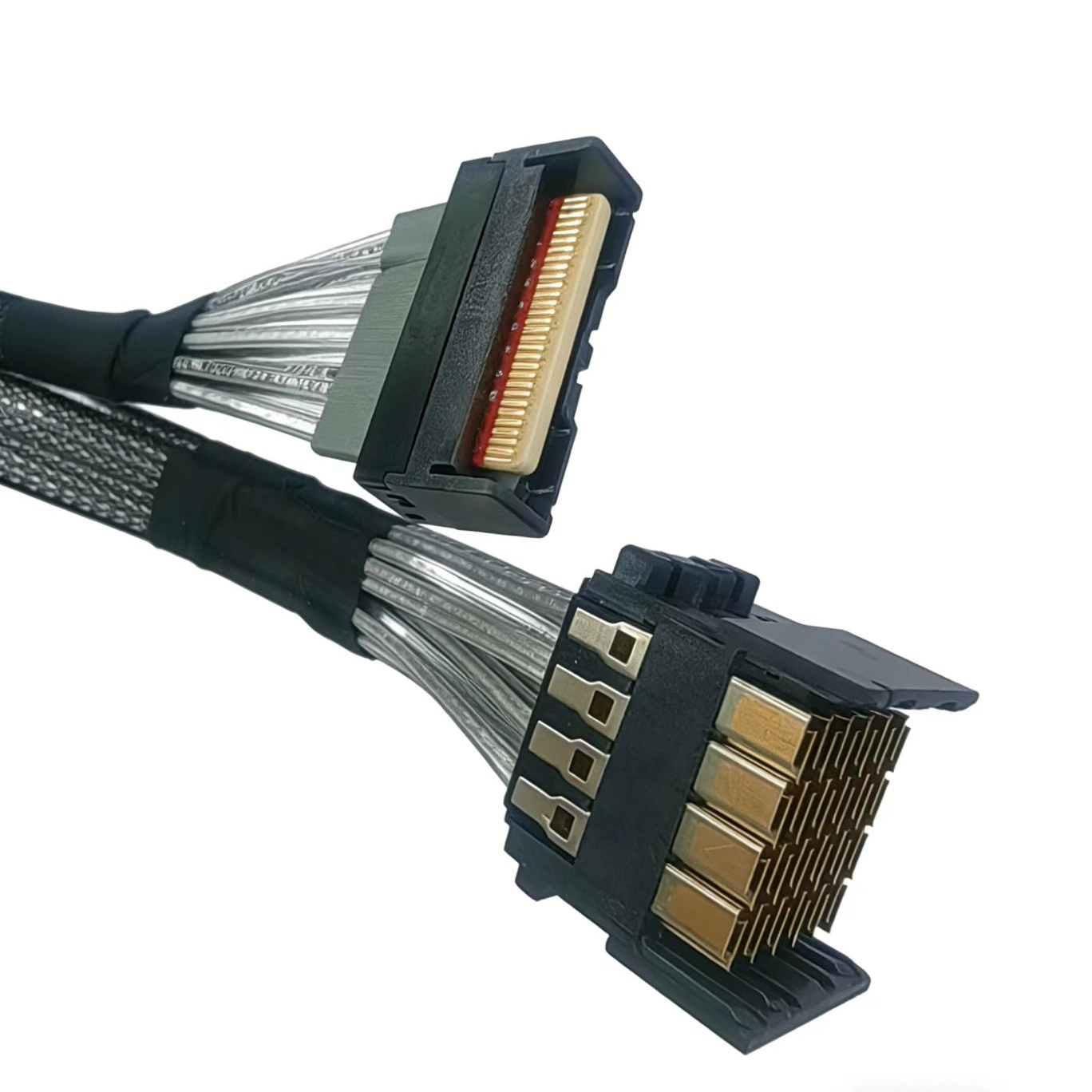
Even with perfect alignment, MCIO 16X's delicate 0.6mm pitch pins are vulnerable to another threat: scooping or scraping. This occurs when the edge of the receptacle cage catches and bends the signal pins as the connector is inserted or withdrawn at a slight angle.
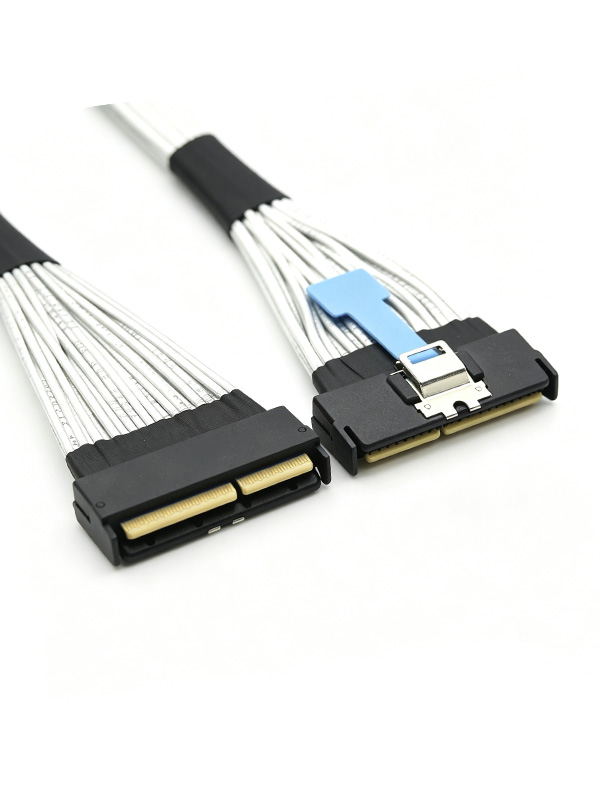
The scoop-proof MCIO 16X design solves this with a full shroud that extends beyond the signal pins. This protective shell acts as a bumper, making first contact with the cage and ensuring the delicate pins are never exposed to the metal edge.
Pin Protection: The shroud completely encloses the contact array, preventing physical damage during mating, unmating, or accidental bumping.
ESD Protection: The grounded metal shroud makes contact before the signal pins, providing a path for electrostatic discharge, safeguarding the sensitive high-speed circuitry from ESD spikes.
Durability Boost: Cable assemblies with scoop-proof connectors see their mating cycle life increase from an average of 50 cycles to over 300, a 6x improvement in longevity.
The Cost of Incomplete Protection: A Real-World Case
A leading AI server manufacturer recently experienced a 12% early-failure rate on MCIO 16X cables connecting GPUs in their training clusters. The root cause was traced to standard MCIO connectors lacking both anti-slant and scoop-proof features.
Initial Problem: Standard connectors suffered bent pins from misalignment during installation.
Partial Fix: Upgrading to anti-slant connectors reduced failures to 3.1%.
Final Solution: Only after fully integrating both anti-slant guidance AND scoop-proof shrouds did the failure rate drop to 0.2%, meeting their enterprise reliability targets.
How to Verify Your MCIO 16X Cable's Protection
When specifying or purchasing MCIO 16X cables, inspect the connector for these non-negotiable features:
1.Anti-Slant Check: Look for integrated guide structures and asymmetric polarization keys.
2.Scoop-Proof Check: Ensure the pins are recessed behind a full, enveloping plastic or metal shroud.
3.Pull-Tab Integrity: A robust, strain-relieved pull-tab is part of the protection ecosystem, preventing damage from improper cable pulling.
Beware of low-cost alternatives. Many cables on the market claim MCIO 16X compliance but cut corners by omitting the thickened guide walls and full shrouds. These "bare-bones" connectors will fail prematurely in high-vibration, high-density environments.
Looking Forward: MCIO 16X in the PCIe 6.0 Era
As the industry marches toward PCIe 6.0 (224G PAM4) and 1.6T internal interconnects, the mechanical robustness of the MCIO interface will become even more critical. The anti-slant and scoop-proof designs are not just add-ons—they are foundational requirements for signal integrity. A single bent pin or damaged contact can introduce catastrophic signal loss, crosstalk, and intermittent failures that are notoriously difficult to debug in a fully assembled server.
Conclusion
Your MCIO 16X cable interface is the critical artery of your high-performance system. A standard MCIO 16X without anti-slant guidance and scoop-proof protection is an incomplete solution. To ensure maximum uptime, signal integrity, and return on investment, always specify MCIO 16X cables that integrate all three layers of protection. By doing so, you build a resilient interconnect infrastructure that can withstand the rigors of deployment, maintenance, and the relentless pace of technological advancement.



Copyright © 2025 Guangdong Jiumutong Communication Technology Co., Ltd All Rights Reserved
Designed by